What's The Point, Walter?

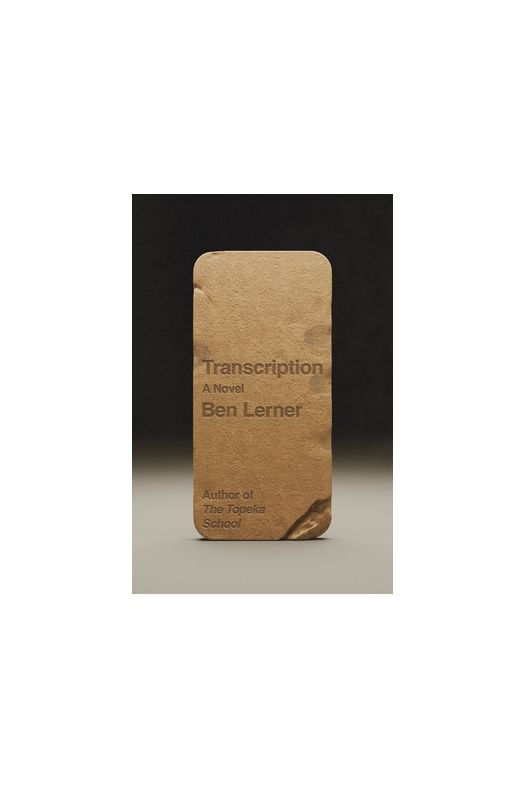
After the end of Transcription—the point when Max relates the story of his father’s holding his hands and says “For fear of vibrations, low voices in their presence…” —there is more. It is a quoted letter by the man who created the glass flowers, Leopold Blaschka. He is writing about the process of creating the flowers and says, “We (he and his son) have the touch…the touch increases in every generation. The only way to become a glass modeler of skill…is to get a good great-grandfather who loved glass…” He then describes how this touch is passed down from generation to generation, from father to son. (I know, this excludes half of humans—don’t shoot the messenger).
Taken literally, this is a statement (along with the story about the glass flowers and creativity) about artistic talent being not so much a learned skill but a genetic trait that is inherited or not in a process beyond human control. In the story, we have a father, Thomas, who is intensely creative but has seemingly not passed on this trait to his son, Max, who is an attorney. (apologies to attorneys). The protagonist, however, who is Thomas’ mentee, is shown as being creative. He is a writer, but has no genetic connection with Thomas, although I think the point here is not to think of genetics so literally but of a relationship of a father-like figure and a son-like figure.
The end note is significant; it represents the implied author’s work of shaping the narrative in a particular way. It’s not technically an epilogue, as it doesn’t present the future of the characters or story after the last page. It’s more of a comment on the story, on the process of making art.
Of course, Transcription itself is a work of art, so this whole business is extremely self-referential, commenting on itself. We can infer that the implied author has created the story by the process he described earlier. “I kept seeing the flowers as organic one instant and as artificial the next, a kind of duck-rabbit effect, not between things the object might represent, but between nature and culture, the given and constructed…I could will myself to see the rose and pink of a sunset as applied in touches or stains and then revert to seeing it as natural…”
Mr. Lerner also says that art is making a copy of nature, which is Aristotle’s idealization of mimesis, a sort of transcription from one thing to another. The glass flowers are a copy of “real” flowers. Transcription is a copy of “real” events (in a realist book). It’s also based on transcriptions of recorded conversations. What is “real?”
The story is not “real” though, it’s a constructed fiction. That is, it’s possible that Mr. Lerner actually has a daughter with an eating disorder—I don’t know, it’s none of my business. He may be using this personal experience to create a fiction. He may have a mentor/mentee relationship with an older artist (Alexander Kluge, perhaps?). Again, I don’t know. He may or he may be making it all up. I think what’s likely is that Mr. Lerner takes something real from nature and applies “touches and stains” to it in order to create Transcription. And part of this creation is to discuss the process of how it was made.
Is there a traditional story structure here—a beginning, middle, and end with the protagonist transforming in an arc over the course of things?
It’s a tale about a writer—the protagonist—who travels to two different cities, staying at two different hotels because of Thomas, his mentor whom he met some twenty years before. Then, in a third section (and from a third hotel) the mentor’s son, Max, tells the protagonist a story which seems to echo the protagonist’s own experience as a father, a husband, and a son.
Let’s say there are story elements. Both the protagonist and his “doppelganger” Max describe a story of their daughters’ struggle with eating disorders and there is movement. Both girls go from near death to recovery. And both fathers go from not knowing how to be a parent to someone so ill to becoming a “better” parent.
Max describes a harrowing tale of being separated from whom he believes to be a dying father and going through a process of emotional resolution and acceptance—not only of a parent’s death but of the end of the possibility of reconciliation. Of course, then that process is almost comically interrupted when Max’s father miraculously recovers. But only for a time, and both men must go through a grieving process after Thomas’ “real” death.
And there’s a transformational process lurking in the protagonist’s relationship with his phone, a process of grief. He goes from utter dependence on it, to, after its loss, denial, anger, and acceptance, finally emerging as consciously less dependent on its presence.
So there is plenty of transformation here, but it’s not neatly presented as a smooth arc.
What of the beginning, middle, and end stuff? “Kay, the story begins with a protagonist traveling to see a mentor. He is befuddled and not so competent as a father. He struggles through the middle, engaged in a long interview with Thomas and then having to accept the anger of others like Rosa at his reaction to Thomas’ death. Then, at the end, he—his doppleganger, Max—learns how to be a more competent adult as a father and as the son of a deceased parent.
So, is Transcription a fiction?
“…it is ourselves we are encountering whenever we invent fictions…Fictions are for finding things out, and they change as the needs of sense-making change…fictions…make sense of the here and now.” -Frank Kermode
Ooh!
Let’s stop there.
Till next time.
Comments